

“Your survival response is not a moral failing. An abnormal reaction to an abnormal situation is normal behavior.”
Viktor Frankel
In my trauma focused clinical work, people sometimes arrive at a kind of universal question: Why does this seem harder for me than for other people?
It can be challenging to notice and change the comparison-of-suffering game within families. A client might be reflecting on their experience of a long-standing family-related struggle and says, “But my parents (or sibling) went through worse than I did, so why am I struggling this much?”
In my particular area of focus with neurodivergent families, I notice these questions tend to surface pretty quickly and can feel heavier, especially when ADHD, sensory sensitivity, or emotional intensity are layered onto intergenerational dynamics or trauma.
When it comes to why one person and not the other, when we are talking about how some people seem more affected by traumatic experiences than others, one framework I share with clients that helps me make sense of these differences is the diathesis-stress model.
Generational or ancestral or intergenerational trauma is the psychological effects of a trauma that gets passed down from one generation to the next – within one family or a group of people.
While every person’s circumstances (individual, socioeconomic, cultural, familial), their vulnerabilities and strengths are different from each other, the implications of this model do show up every day in the therapy session room. You might hear this referred to as our intersectionality – all the things that shape our unique experiences throughout our lives, from gender, socioeconomic circumstances, religion, education, and yes, you guessed it, our neurotype.
The diathesis-stress model in real life
The diathesis-stress model is one way to understand the interaction between individual vulnerability and stress, over time. A diathesis refers to a pre-existing vulnerability, which may be genetic, neurobiological, or shaped by early relational experiences (ADHD is an example of one of those). Stress refers to environmental pressures such as trauma, chronic conflict, emotional or physical neglect, loss, or chronic instability. The earlier and longer a vulnerable individual experiences the relentless stressor, the more of a long term impact it could have on that person.
Basically, some stress is good – it’s how we build resilience (and in fact you can’t build resilience without adversity). Maybe we’ve gone too far in trying to shield our children from everyday stressors, given that this is in fact what helps them discover who they are, and build skills to feel confidant navigating life.
But too much stress with no relief, over time, has a negative effect on our brain’s neuroplasticity (our brain’s ability to continuously heal itself, to learn new things, to gain new adaptions).
The model helps explain why two people can experience similar experiences we might collectively call ‘trauma’, yet have very different outcomes. One person seems to have adapted with relative stability, while another develops severe anxiety, depression, or full-blown PTSD. This kind of difference is not about resilience versus weakness. It is about the cumulative load, worsened when there has been no one there to help carry it (Spencer et al., 2015).
In neurodivergent families, vulnerabilities are often already present at the level of the nervous system; we know from research in neuroscience that the same frontoparietal pathways that fire in PTSD are the same ones that light up in an ADHD brain (Crenshaw, 2025).
ADHD, autism and sensory processing differences involve distinct patterns of attention, emotion regulation and threat perception (and important side note: these differences by themselves don’t make a diagnosis). However, when paired with chronic interpersonal stress or repeated mis-attunement, psychological vulnerability increases significantly.
And it continues to feel hard, especially for late-diagnosed ADHD, Autistic or AuDHD adults, because the first people we often want to tell are our existing family, friends or romantic partner.
And on this topic, they might not be where we are. They haven’t had the benefit of the diagnostic experience we have had.
And while they might one day get there, ADHD in particular doesn’t exactly set us up to be patient. This continues to be an ongoing relational stressor, humming in the background of our interactions, and lives.
Understanding trauma as interpersonal stress, rather than individual failure
If cognitive flexibility is an executive function, then we can consider that being innately cognitively inflexible is a target for the ADHD adapted psychotherapist, as well as a perspective to consider for our undiagnosed loved ones.
From an Interpersonal Psychotherapy (IPT) perspective, the diathesis-stress model becomes a tool that can be less abstract and perhaps more relational. We can frame our (and their) vulnerability as not only biological, but shaped by their attachment experiences and repeated interpersonal stressors that remain unresolved within their current relational experiences.
“Ignoring the pain actually deepens it. What is hidden from sight often increases in intensity.”
Mark Wolynn, author of It Didn’t Start With You
If we know from research trauma symptoms emerge when relational stress exceeds our capacity for regulation (soothing) and repair, and we are in these prickly relationships, it’s easier to see why we feel so stuck.
The everyday experiences of chronic emotional unavailability, unresolved conflicts, ambiguous loss, rigid role expectations or repeated invalidation become our ongoing stressors. We end up doing all kinds of things to adapt and learn to cope (ADHD driven self-medication enters the chat).
There is good news.
Neuroscience confirms what IPT has long understood clinically: relationships are one of the strongest influences on our emotional wellbeing, how we understand ourselves and how we manage stress.
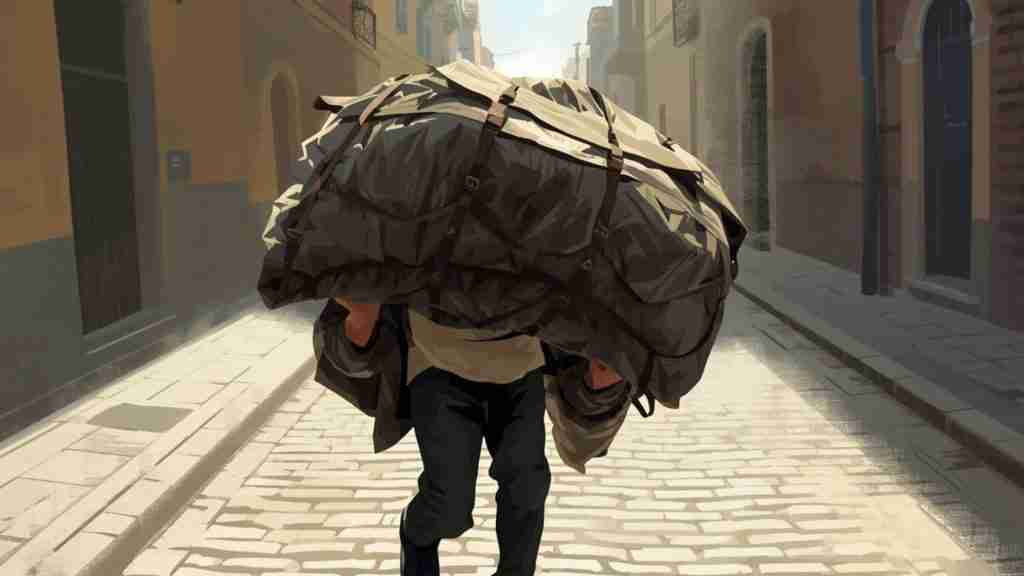
If stress in relationships never lets up, the body adapts for survival. Staying on edge, shutting down or reacting quickly are not flaws. They are learned responses to long-term stress.
They are relationally learned survival strategies.
Neuroplasticity refers to the brain’s ability to adapt in response to experience, and our brains are beasts of efficiency. Unaddressed trauma redirects our brains precious resources toward survival.
Chronic stress is associated with changes in brain regions involved in memory, emotional regulation and threat detection.
The adaptive neurochemical changes in the brain reflect a brain doing exactly what it evolved to do under threat: prioritize detection of danger and rapid response over reflection and flexibility.
Over time, our survival-oriented wiring can become rigid, which again, is by design. The nervous system becomes less able to shift out of threat states, making it harder to access the kind of adaptive neuroplasticity that supports our modern understanding of emotional regulation, perspective-taking and relational repair.
And as you can imagine, as we are struggling to make sense of these things, we may not be showing up in our relationships as the best version of ourselves – often, far from it.
So, while we are yearning for acceptance, softness, stability and peace – we aren’t necessarily giving off those vibes either. The kind of demoralized sadness that follows emotional isolation becomes easier to understand.
Trauma load across generations

“For “full” emotional communication, one person needs to allow
Daniel J. Siegel
his state of mind to be influenced by that of the other.”
In many families, ongoing challenges we now understand as ‘trauma’ usually haven’t been a single catastrophic event (although sometimes it is). Rather it’s the stuff that accumulates quietly across time and relationships.
As kids or teens, we can experience:
- Emotionally unavailable caregivers
- High criticism with limited repair
- Unspoken family cultural expectations rooted in survival narratives
- Repeated dismissal of emotional or sensory needs
From an attachment perspective, these are the circumstances that start to create the model of what ‘feels like home’. It’s the unconscious patterns that we eventually feel competent handling, even when it doesn’t make sense for us to continue to cope this way into adulthood.
Mostly all children adapt by suppressing needs, staying hyper-attuned to others or disconnecting emotionally. Neurodivergent kids, whose sensory and emotional thresholds may already differ, these adaptations often become evident earlier and more obviously.
Then, as these patterns repeat across generations, interpersonal stress just becomes normalized.
What one generation calls stoicism or endurance, the next experiences as emotional neglect. Our nervous systems carry forward to our new relationships what our older relationships did not resolve.
Why healing feels harder for some people
Clients have told me they sometimes worry that trauma has permanently damaged them, and therefore their capacity to heal.
A more accurate and compassionate explanation is this: higher trauma exposure, particularly early and relational, creates deeper patterns to re-wire in the nervous system. Those patterns take time to re-wire. And if you’re with me so far you now know, they also take the experience of psychologically safe relationships (hopefully you are having one with your therapist to anchor in). We start to define what safety is for you in our therapy sessions, and find ways to get to repeated experiences of relational safety, clarity and repair within chosen relationships.
Back to the beginning
Circling back to the question we asked at the beginning: Why does this seem harder for me than for other people? The answer is, often it isn’t. You might just be exploring things others have not yet had the chance, interest, or capacity to yet.
Every human is developing, growing, learning and experiencing in their own unique way.
Coming to therapy can be about figuring out how to first identify what your unique conditions for relational safety are, and then in relationship with a skilled therapist, collaboratively figuring out how to invite your chosen loved ones in, to create more of those conditions, in whatever dose you need, until you feel better.
References
Crenshaw, W., PhD. (2025, March 26). The relationship between PTSD and ADHD: Symptoms, diagnosis, treatment. ADDitude. https://www.additudemag.com/ptsd-symptoms-adhd-diagnosis-difficult/
Spencer, A. E., Faraone, S. V., Bogucki, O. E., Pope, A. L., Uchida, M., Milad, M. R., Spencer, T. J., Woodworth, K. Y., & Biederman, J. (2015). Examining the association between posttraumatic Stress disorder and Attention-Deficit/Hyperactivity Disorder. The Journal of Clinical Psychiatry, 77(01), 72–83. https://doi.org/10.4088/jcp.14r09479
Looking for related content?
Check out some of our free resources.
- Learn about ADHD,
- Explore ADHD diagnosis and treatment with Dig a Little Deeper,
- Find an ADHD trained and experienced clinical supervisor,
- Find an ADHD trained and experienced therapist, counsellor or coach.
