

If you’ve been searching for horse-assisted support in Ontario, you’ve probably noticed that the landscape looks different depending on where you look. Wellness retreats, barn programs, equine coaching, and clinical therapy can all appear side by side online, sometimes with similar language and very different price tags.
That’s not a problem with the field — it’s a reflection of how genuinely varied horse-assisted work is. Horses support people across a wide spectrum of contexts, from personal growth and stress relief to structured clinical treatment. Understanding where different kinds of programs sit on that spectrum helps you find the one that actually fits what you’re looking for.

The Equine-Assisted Spectrum: Wellness, Coaching and Clinical Care
Horse-assisted programs exist across a broad continuum, and each part of it has genuine value.
Equine wellness programs and barn-based experiences offer connection, grounding, and a break from the pressures of daily life. Many people find real benefit in simply spending time with horses in a supported environment. These programs don’t require clinical oversight to be meaningful.
Equine coaching and facilitated learning programs work with horses as partners in personal development, leadership, and self-awareness. Coaches and equine-assisted facilitators often bring deep knowledge of horsemanship, somatic experience, and group facilitation. The title “equine therapist” or “equine coach” is not a protected designation in Ontario, which means these practitioners vary widely in their backgrounds — something worth exploring when you’re choosing a program.
Equine-Assisted Psychotherapy (EAP) is a specific clinical intervention delivered by a regulated mental health professional. In Ontario, performing the controlled act of psychotherapy (treating mental health conditions, trauma, and emotional disorders) is restricted to members of a recognized regulatory college, such as the College of Registered Psychotherapists of Ontario (CRPO). EAP uses the horse-human relationship as an intentional clinical tool within a structured treatment framework.
What Changes When Clinical Treatment Is What You Need
If you’re navigating a diagnosed mental health condition, trauma, or something that hasn’t responded to other approaches, the type of credential your provider holds becomes clinically relevant. Here’s what working with a regulated professional adds:
- Authorization to treat: Registered Psychotherapists and other regulated health professionals are authorized under Ontario law to perform psychotherapy with clients presenting mental health concerns. This is a legal distinction, not just a credential.
- Professional liability coverage: Regulated practitioners carry malpractice and liability insurance specific to clinical mental health work.
- Ethical oversight and recourse: If something goes wrong in your care, a regulatory college provides a formal accountability process. That mechanism doesn’t exist outside of regulated practice.
- Benefits coverage: Most workplace benefit plans (Sun Life, Manulife, Canada Life and others) cover services provided by Registered Psychotherapists or Social Workers. If insurance reimbursement matters to you, this is worth confirming before you book.
Questions to Ask Before You Book
Whether you’re looking for a wellness experience, personal development work, or clinical treatment, asking a few direct questions helps you find the right fit:
- “Are you a member of a regulatory college in Ontario (such as CRPO, OCSWSSW, or CNO)?”
- “Can sessions be billed through my workplace benefits?”
- “How do you connect what happens with the horse to my specific mental health goals?”
A clinician offering EAP should be able to describe a clear treatment framework and explain how the equine component integrates with your goals. A wellness or coaching program should be transparent about what it is and what it isn’t. Either answer helps you make a good decision.
What Equine-Assisted Psychotherapy Looks Like at Dig a Little Deeper
At Dig A Little Deeper, our Equine-Assisted Psychotherapy is offered at 2 locations in Ontario.
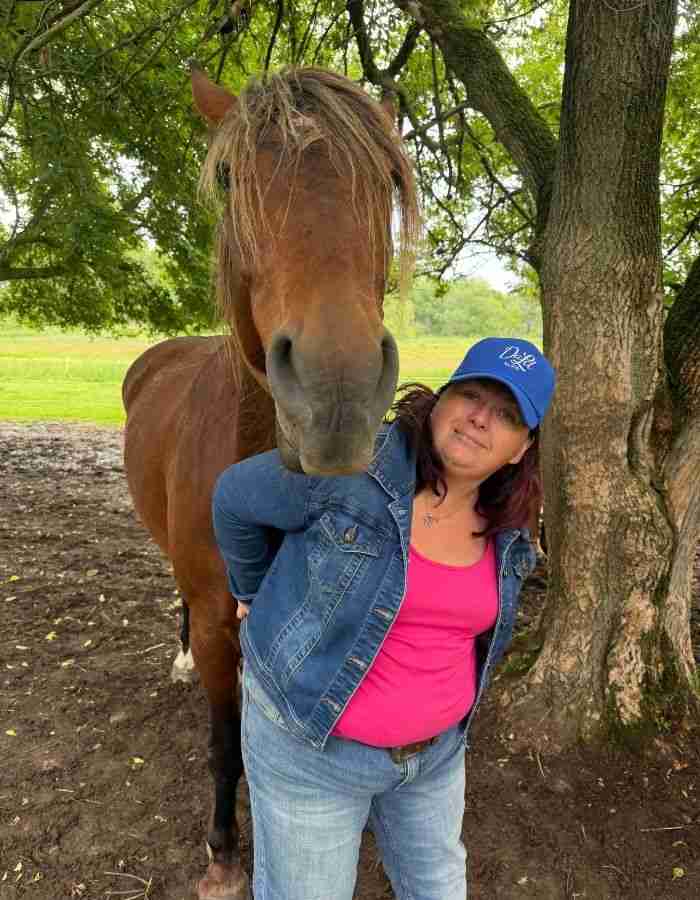
Alicia’s Heart Horse Counselling program is located in Blandford-Blenheim (just north of the 401, a bit west of Waterloo), and Christina offers sessions at Rusty Jade Ranch in Palgrave, about 15 minutes north of downtown Bolton.
Sessions are grounded in evidence-based psychotherapy and delivered by registered clinicians who integrate the horse-human relationship as a deliberate clinical tool.
We work with clients navigating trauma, late-identified neurodivergent presentations, first responder occupational stress, and the kind of stuck that doesn’t always respond to a traditional office setting. Horses offer something that a therapy room sometimes doesn’t: the benefit of a non-verbal relationship that reflects what’s happening in your nervous system in real time.
If you’re curious about whether Equine-Assisted Psychotherapy might be a fit for you, we’re happy to talk through what the work looks like and what to expect.
